Category Archives: 2019

Searching for Gododdin (ii): Chesters Hill Fort (Drem)

In the last post I introduced the idea that certain members of an armed contingent called the Gododdin, which marched from the Lothians to the Battle of Catreath in 600 AD, had connections to East Lothian. We observed ElphinElphinstone, Rhuvawn-Ravensheugh & Gwid-Kidlaw, all of which were connected to Iron-Age fortresses or burial centers. In the same fashion, I would like to introduce an idea that the 6th century warrior known as Dremrudd was once a warlord at an outstandingly impressive & fabulously well-preserved hill-fort called the Chesters, only a stone’s throw away from the village of Drem. The stanza in which he is found in Y Gododdin (my translation) reads:

Ye Kings stand firm twyx Dremrudd’s ruddy glances,
Whose purposes times pillages obscure,
Men plough the seas with pure impunity,
Of these, the palest first is satisfied,
A wee bit crazed & yet his crown complete,
Before him garden-cover’d, Gownddelw,
Right worthy, lived as tall as did Maelderw,
Wielded his spears as such we bards must praise
How his soul-strength pervaded many lands

75c7f621-b78f-4aad-a0dd-baaffa8e1c84

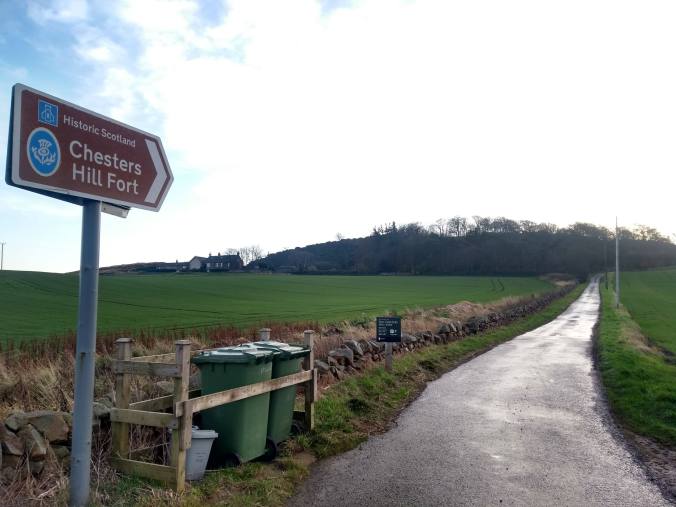
I like late January, with the morning twilights coming earlier & growing nearer to my bedroom window, & the evening’s light lasting just a tad while longer – Spring is definitively coming! But, there is nothing like a crisp, clear winter’s morning for a walk; so me & Daisy found ourselves driving into the quaint, wee, 3-bay car-park at the Chesters.
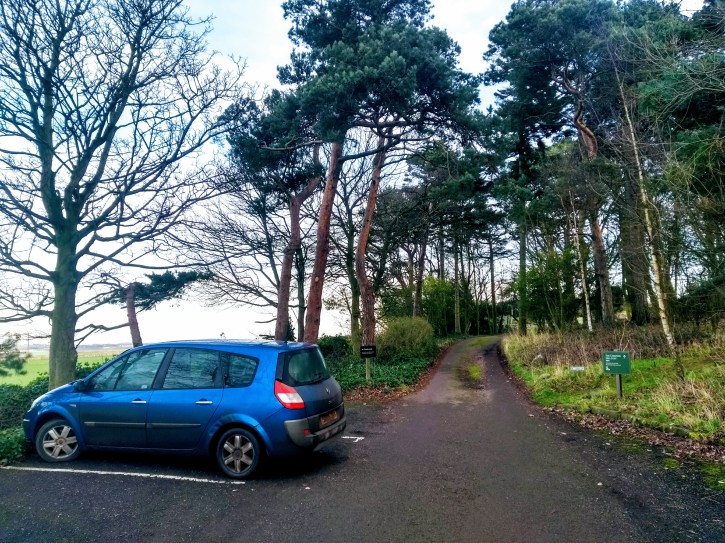
The best way to enjoy this walk is to not head straight for the hillfort along the path, but to veer right into the woodland. At this time of year the branches are bare & the air is insect free, which lent a real feeling of barren tranquility to the occasion.
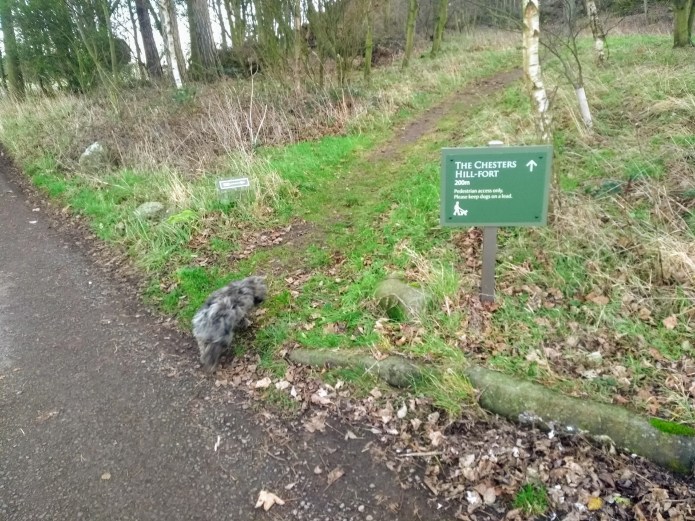
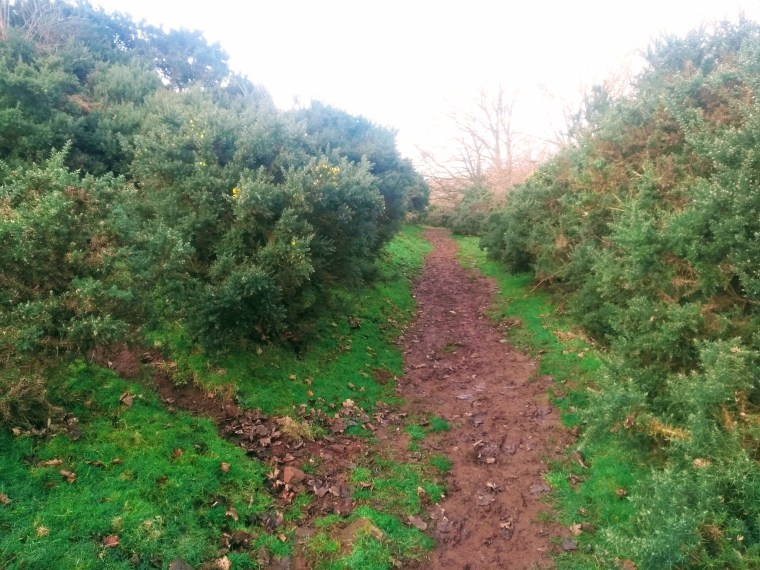
Passing up & over a gate, we enter’d a new field, with gorse on our left, while over the wall to the right sat a handsome blue tractor!

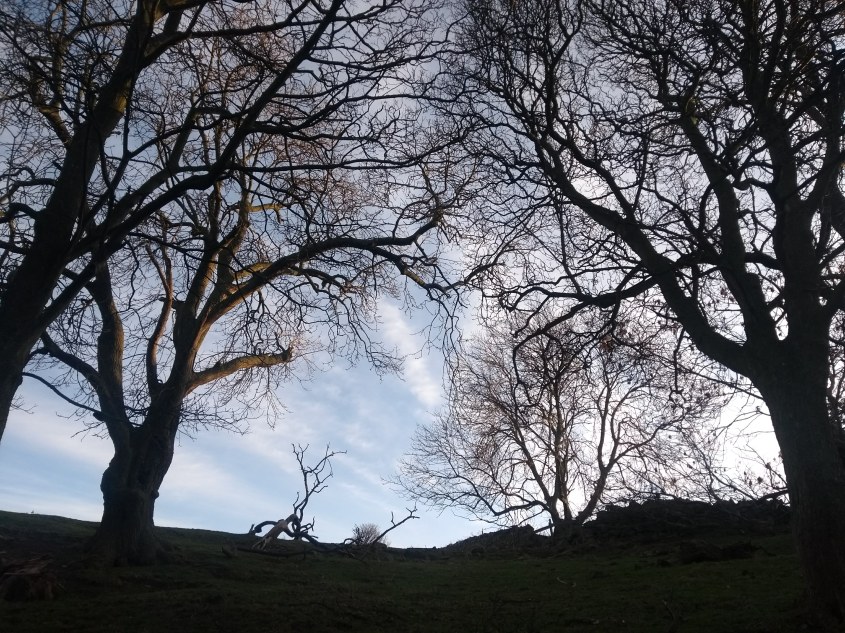
At this point we began to ascend a steepish slope to our left, with Daisy sniffing for rabbits as we went.I was loving the way the tree branches in this silent corner of the county were making weird webbing patterns against the sky.

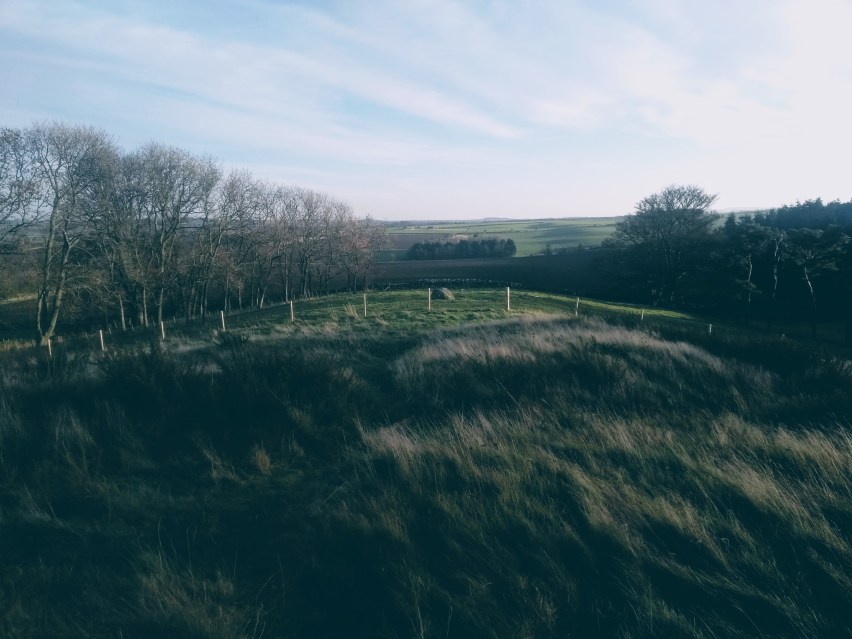
After a wee while we reached a fine plateaux, with splendid views all round. At the rough summit spot, one can make out Edinburgh, Fife, North Berwick Law, & even Torness Power Station in the far distance.

Crossing the plateaux to the NE – aiming for North Berwick Law – we reached a clumsy wall, thro’ a gap in which we found ourselves on a hillslope thick with gorse & paths. Here we had our first glimpse of the Chesters directly to the north, in which direction we paced our way down paths & through gorse.
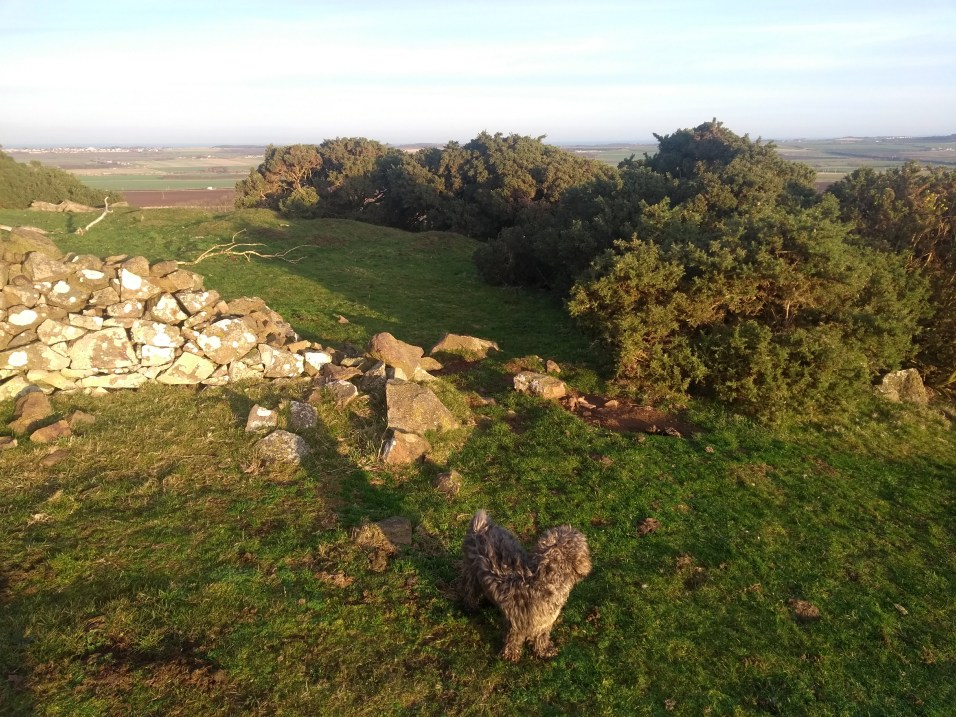
Once we reached the valley bottom, we turned left, & headed towards a stile in the distance, over which we popped & did a U-turn of sorts in order to explore the hillfort to its eastern end.

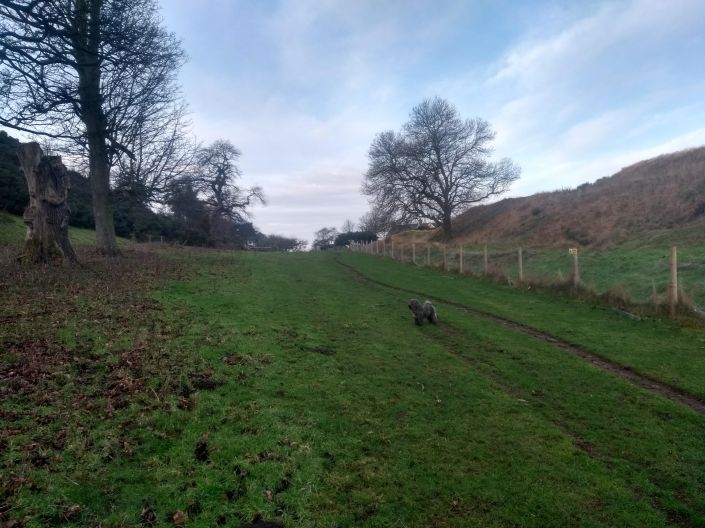
What a joy; an excuisite circumvallating heap of vivid turf walls & defensive ditches, all lush-flush with hibernating grasses. The Chesters consists of two acres of atmospheric circles atop a conical eminence, but as a defensive position its a bit daft – an invading army could easily have slung rocks and arrows from the heights from whence we came earlier. But, it was heavily defended – perhaps it was an iron-age bank or something, protecting the treasures of the Gododdin chiefs. It was certainly very high-status, & as I have already stated, connected in some way to Dremrudd.

The quantifiably excellent vistas obtained from the Chesters were very much favored during the two World Wars of last century, in the capacity of an observation post. Just a couple of miles away lay RAF Drem, a vital chain in the protection of Britain, overlooking the waterways of the Firth of Forth with all of its crucial shipping. To protect Drem, an anti-aircraft gun emplacement was also established right on the Chesters.
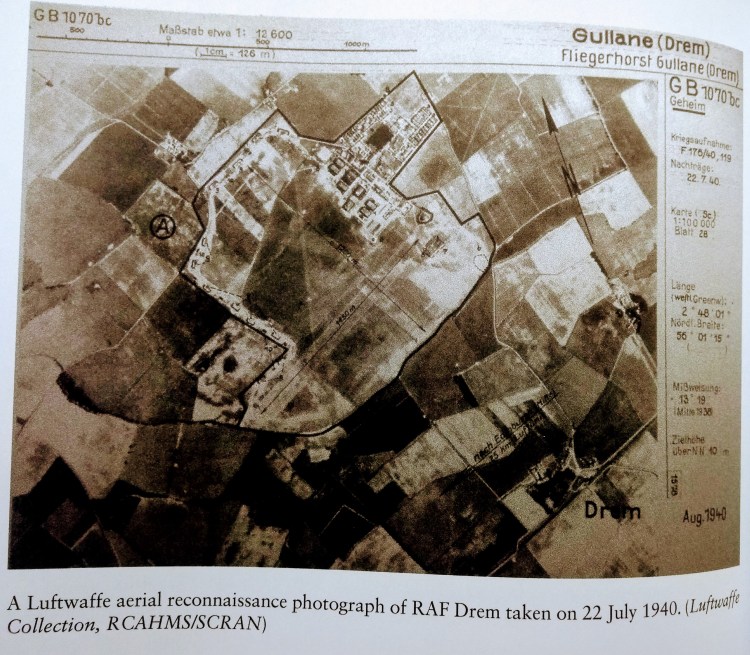
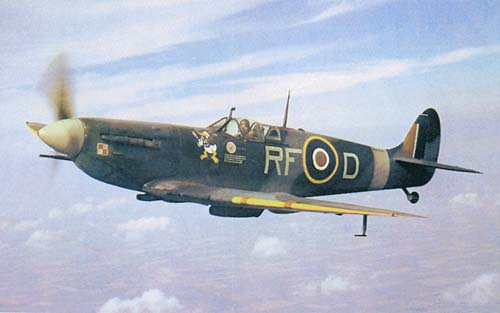
During the Second World War, Drem was abuzz with different squadrons & planes – including Mosquitos & Hawker Hurricanes – piloted by an ever increasing array of internationals. The first edition of the Supermarine Spitfire flew from Drem in 1939 (A&B Flights of 72 Squadron),  & 16 editions later, at the end of the war, they were still flying from Drem.
While stood on the Chesters, observing the merry meld of sky, sea, & land, I began imagining the dog-fighting scene during the first major air-battle over Britain of the Second World War. It took place on the 16th October, 1939, only 3 days after 602 Squadron had moved to Drem to bolster the defences around the Firth of Forth.

Thinking that the War would be over in a matter of weeks, the Germans had decided to attack the shipping at Rosyth, roaring in over the Lammermuirs & along the Forth in four waves of three Junkers Ju 88 bombers of the 1 Gruppe Kampfgeschwader. Taking the British air-defence completely by surprise, they scored some damage.

Spitfires from Drem & Turnhouse (Edinburgh) were scrambl’d to attack the raiders, resulting in the first two Luftwaffe bombers shot down, one of which was claimed by George Pinkerton of 602 at Drem. It was brought down off the May Island and two crew were rescued by a trawler; they were transferred to Military Custody at Edinburgh Castle where they were visted by George himself. A third plane was struck by ack-ack fire & limped through the skies to Holland, where it made a forced landing in which all the crew were killed.

A Junkers Ju 88

Back at Rosyth, the cruisers HMS Edinburgh and HMS Mohawk, and the destroyer, HMS Southampton, had all sustained direct hits, but did not sink. 15 Sailors who were killed, was not released for many years. Some of the dead are interred in the Naval section of South Queensferry Cemetery.

In the early noughties, the BBC ran a sheme called ‘People’s War’ asking viewers to send in accounts of the war. From these I found Edward Thomson’s account of the attack, made in  2003.

I was a passenger on the Dundee section of an Edinburgh to Aberdeen train which had just entered the first arch at the Southern end of the Bridge. The next stop was to be Leuchars Junction. I was in the corridor with an older boy called Jack Thomas from Edinburgh. We were looking downstream to the right of the carriage and were trying to identify some of the fleet at anchor below the bridge. Almost simultaneously there was a giant waterspout as high as the bridge alongside one of the capital ships and a barge tied up alongside; it seemed to fly up in the air! In later life I discovered it was HMS Southampton. There were two or three other explosions further off and one of the ships was actually struck; it was HMS Mohawk and casualties were sustained on board.
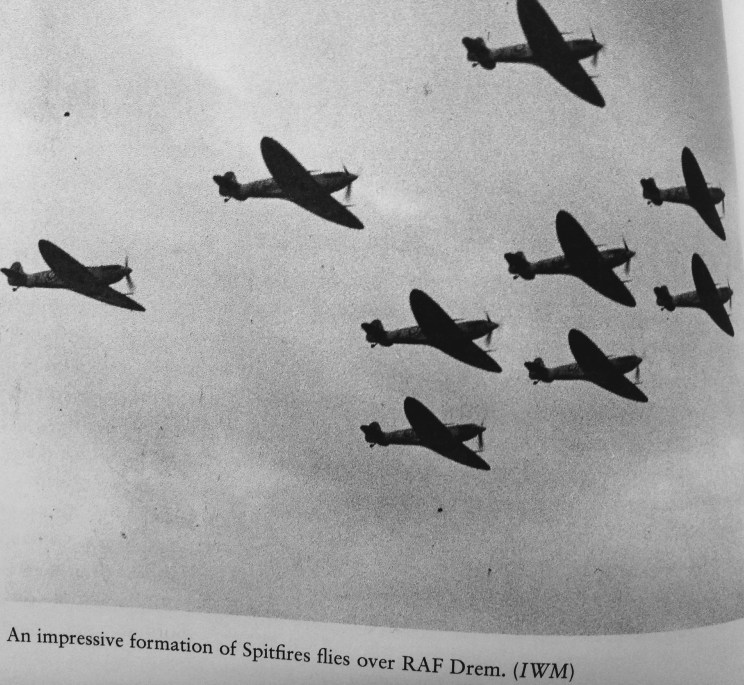
Drem was a relative placid posting – with squadrons being rotated here from the wild SE corner of England. In November 1941, a member of 611 Squadron (West Lancashire) recorded his unimpress’d observations of arriving at Drem.

As compared with Hornchurch, Drem has a very long way to go. The men have four wooden huts in which to sleep (35 men to each) & heated by 2 coal stoves. Senior NCOs & Officers both have the old type messes. Dispersal point is situated along the south-west side of teh flying field. There are 5 wooden huts, 2 for pilots, 1 each for A- & B- flight’s ground crews & 1 for signal & armament personnel. Squadron HQ is on the opposite side of the flying field & is very reminscent of the wooden HQ which the Squadron had in pre-war days at Speke. It must be realized that Hornchurch has been completely modernized & everything is most up to date whilst here no modernization has been carried out yet

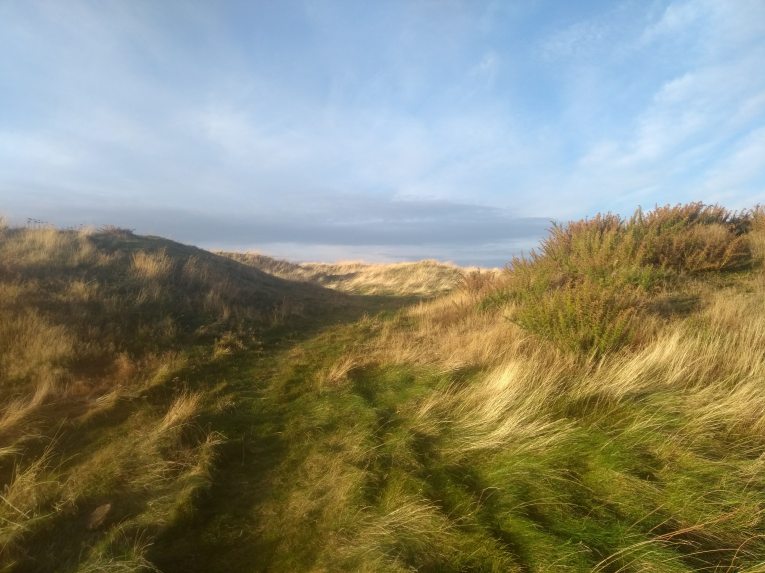
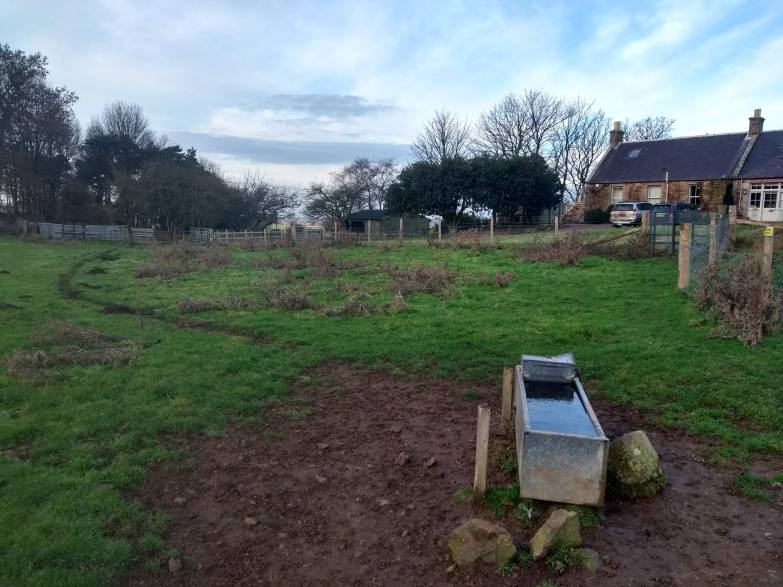
At the eastern end of the Chesters are the remains of a double gateway, through which me & Daisy bounced. We next came to a fortuitous hole in the fence, through which we went, turning sharply right & downhill. Then, it was a return to the valley, along which we went, this time passing the stile & reaching the sites information point.
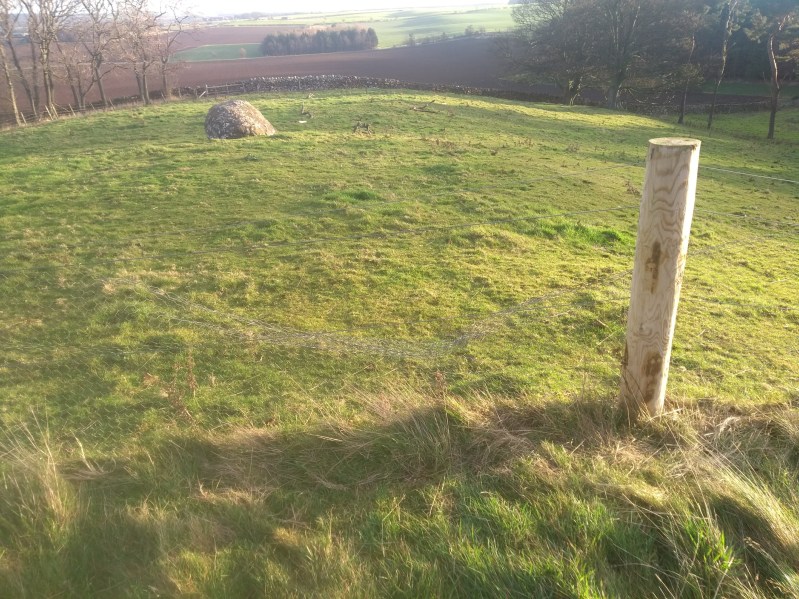
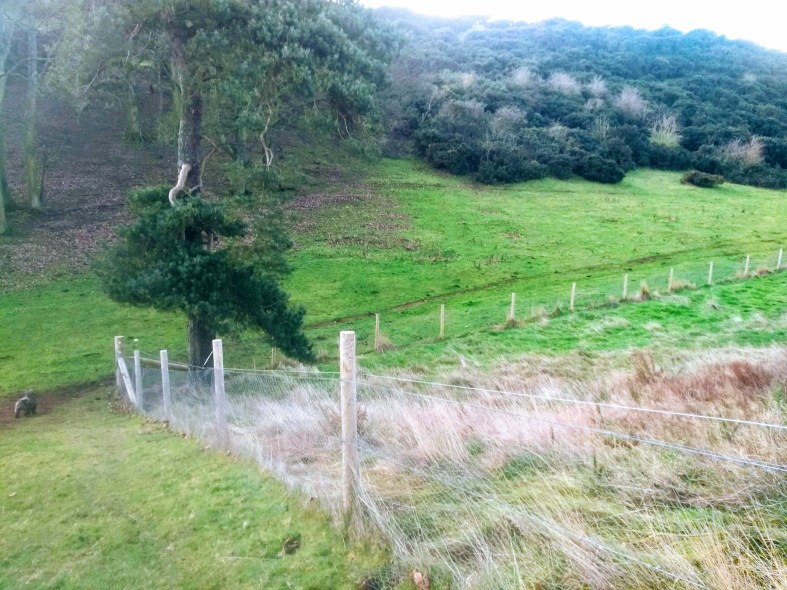
The hole in the fence

It was then a wee potter back through the woods & to the car. We really enjoyed this walk. Its all a bit short, like, but its quiet & you can freely meander about a lot like a drunken spaniel, so make what you will of the occasion!


To contribute petrol & petfood

Please make a donation

***

Searching for Gododdin (i) : Traprain Law

IMG_20181227_111858018_HDR.jpg

Hello & welcome to year two of my Walking East Lothian series. So far we have scratched the surface of just some of this remarkable county’s scenically sensational & really quite interesting walks.  There seems to be history popping out of every rock! To open 2019 I thought I would dig deep into the area’s earliest recorded inhabitants, an Iron Age tribe named the Otalini by the 2nd century Roman geographer, Ptolemy.

Further south [i.e. below the Selgovae] are the Otalini (sic), among whom are the following towns: Coria 20*10 59∞00 Alauna 23*00 58∞40 Bremenium 21*00 58∞45″

Their tribal territories spread from Falkirk, through all the Lothians & into the eastern borders as far as Northumberland, where the town’s mentioned above seem to have been situated. Coria would be Corbridge, Alavna would be Learchild near the River aln, & Bremenivm, High Rochester. Other passages in Ptolemy give us a few coastal & river names, such as Firth of Forth (Bodotria Aestuarium), the River Coquet (Cocuveda Fluvius) & the River Tyne (Tineus Fluvius).

They also had a hill-fort on East Lothian’s lodestar, Traprain Law – a 3rd century horde of Roman Silver was discover’d here, indicating a settlement of some importance. By the sixth century, the Otadini had become the Gododdin, at least in the Old Welsh language of their native poet Aneirin. It is from him & his fabulous poem, Y Gododdin, that we learn how the tribe had moved their principle seat to Edinburgh, from where 300 warriors marched to the battlefield of Catraeth. Only a handful would survive, including Aneirin, whose series of elegies to the fallen dead is the first true literary treasure of the British Isles.

I have translated Y Gododdin myself (you can read it here) & as I did so I began to notice matches between the names of the warriors & certain places in East Lothian. Once is nothing, twice a lucky coincidence, three times a gently extending ‘hmmmm,’ & four times an, ‘I really do need to open 2019 with a ‘Searching for Gododdin’ series.’ For example, there are two stanzas which mention a certain Elphin, who could be the same man to whom a memorial stone was erected at the Dark Age burial near Elphinstone. Other Gododdin-East Lothian connections begin with a certain Rhuvawn, whose name could well have corrupted into Ravensheugh, the site of a hill-fort at the northern extremity of Seacliff Beach. According to the medieval Welsh Triads, Rhuvawn was one of the three Fair Princes of Britain alongside the famous Owain of Rheged. There is also a warrior called Gwid, son of Peithan, whose name may be present in Kidlaw (Gwidlaw). Here is the stanza in which he appears in my translation of Y Gododdin

No hall was ever made more eminent,
Nor mightier, for slaughters more immense;
The mead of Morien has turn’d to flame
& none could say that Cynon can’t carve corpses,
Whose hero-sword resounds around the ramparts,
No more than we can move a massive boulder,
Will Gwid, the son of Peithan, too be moved!

So to my first walk of the series, & the so-called early capital of the Votadini at Traprain, from which the ‘v’ moves to the ‘g’ of Gododdin through natural phonetic interchangeability. Earlier last year I skiffed the slopes of Traprain Law on my investigations into the Loth Stone, but this time we would be hitting the very summit. There is an excellent car-park on Traprain’s northern edge, reachable from the directions of East Linton, Stenton & Haddington.

Daisy & I undertook this walk between Christmas & New Year, on a an extra fine day in which all the natural colours were peculiarly pastoral. Parking up, we entered a small picnic area at which end was a strange guillotine thing which I had to lift up to let Daisy through.

We walk’d parallel to wall for a bit, then turn’d slightly left to start our climb to the summit & to witness those ever-expanding views. That was us, then, climbing slopes hewn from the Earth 320 million years ago. Antiquity indeed, & there has been human occupation on Traprain since the Bronze Age, about 1500 BC.

Looking back to the car park

Daisy loves a good slope, & was scampering about in her usual giddy way. The path was through rocks & gorse, upon the latter of which I noticed a few perfunctory yellow trumpet-heralds embellishing the green, blooming in anticipation with the full orchestra soon to be flushing the hills with brightness.

After a minor path diversion we began to ascend ever higher, the going growing harder & with this pick’d up the wind. We were not alone, a number of fellow walkers were taking advantage of the dry sunshine, & of course thoroughly enjoying the immense panoramas. It is from such vantage that the impressive piece of engineering that is the East Linton A1 bridge can be properly admired.

At the summit I ask’d a mother-daughter couple to take photos of me & Daisy, & they happily obliged. I then offer’d my services in return, & return’d the favour. It turns out I knew the daughter – she is connected to the Haddington Corn Exchange & shows me how to work the lights whenever I hire the hall for some artistic event.

Daisy grabbing a handy drank from the summit pool

So here we were, in the assumed capital of the Votadini, on account of a fabulous horde of Roman silver found here.  Traprain is an excellent setting for rule – massive stretching views in all directions & complete control over the Forth & its access to the world’s seaways.The chieftains must have felt a bit like Hitler at Berchtesgaden, up in the Heavens with delusions of grandeur.

_65653487_traprainteasure
The Traprain Treasure

Now I’d just like to show you something interesting. Speculations have abounded as to why the silver arrived at Traprain c.400 AD, when the Votadini at that time were no longer under Roman jurisdiction. The answer, however, is quite simple.

AtecottiComparisonNDatecottiIunioresGallicani

The first steps in the solution involves recognizing the pattern on the shields of several Roman units, as given in the 5th century Notitia Dignitatum, is identical to the following piece of silverware.

_65686551_largedish

This image was created by Alice Blackwell, based on fragments of the dish being found in the hoard, & their massive similarities with a dish found in Switzerland. One is immediately reminded of the Honariana Attecotti Seniores, a unit of troops drawn from the Attacotti, a hitherto unplaced tribe of Scotland. ‘Honarian’ means they represented Emperor Honorious (395-423 AD), whose coins are the last dated in the Traprain treasure. With the Honariana Attecotti Seniores coming under the Roman Italian command, then  we have credible support for the dish at Traprain being the same as the one found in Switzerland.

We now come to the best bit. For a long, long time, scholars have speculated on the homelands of the Attacotti, but to no avail. However, while looking at an Ogham inscription on an obscure Pictish stone discovered on the Shetland Islands, I hit paydirt. Etched into what is known as the Lunnasting Stone, it reads;

ettecuhetts: ahehhttannn: hccvvevv: nehhtons 

Chispologically speaking, Ettecuhets is a lovely match for Attacotti, especially when we combine two variant spelling in the Notitia, being ‘attecotti’ & ‘attcoetti,’ as in;  Attecoet / Ettecuhet. OK, the Shetlands aren’t the Orkneys, but they are very close & may have been administer’d together 1500 years ago, which suddenly provides the historiographical evidence to explain why King Loth of Lothian was also the King of the Orkneys (& Norway).

With East Lothian spinning in 360 degrees of beauty, I traced the walks I had composed last year, & hinted at those yet to pass. I had first reached the summit of Traprain almost a decade ago, in 2009, during which period I was composing lots of sonnets. This was the result;

Elevated by the Votadini
We scrambl’d up the Laccolithic side
Found picture frame three hundred sixty wide
Elating vision sweet to each degree.

Beneath rocks of volcanic pimplerie
Dunbar, East Linton, Haddington abide,
Fields reach the Forth & beaches there beside
Or lonely Lammermuir where thought soars free.

I cast mine een along the Garleton ridge
To settle on the far-off Forth Road bridge,
Little with distance, ghostly in the mist.

This is the length of Roman Lothian,
A county home my roaming soul hath won
To recollect whenever she is miss’d.

Roll on a decade & I found myself nestled in a rocky outcrop on the eastern end of the summit, rather like those witnessed by the British Army on the Falklands, by Mount Tumbledown. As I gazed down upon the ruins of Hailes Castle, with Daisy greeting the odd climber, I got to work on the first lines of a long poem I intend to write this year – a Wordsworthian effort carved from walks in the Lammermuirs. Here is the opening;

Across the world, among the vale of years,
Lets intimate along the Lammermuirs
Our inclinations natural to roam
In heather’d heights above the feather’d foam
Lost in the dull lights of a day’s rebirth
Our time feels finite of this fertile Earth,
Into the night we drove, down to Dunbar
Where we, by sandstone harbour, park’d our car
Out of the front seat leapt a Lhassapoo
My little Daisy, tho our souls seem two,
We are as one when walking in the hills
By rocks & crags, by riverbanks & rills.

The Quarry

When its not crazy windy, a really pleasant time can be had on the summit – there’s a lot of area for walkers to explore, including the hut-circles to the western end.  For us, I was content to dawdle & compose for a bit, before heading almost straight downhill from the eastern end of the summit, the great quarry rising to our right.

You should eventually see a fence below you, & the car park beyond that. The idea is to make your way over loose paths & what not to the corner of the fence, from where its an easy few meters to the path & the guillotine – & the happy drive home


To contribute petrol & petfood

Please make a donation

***